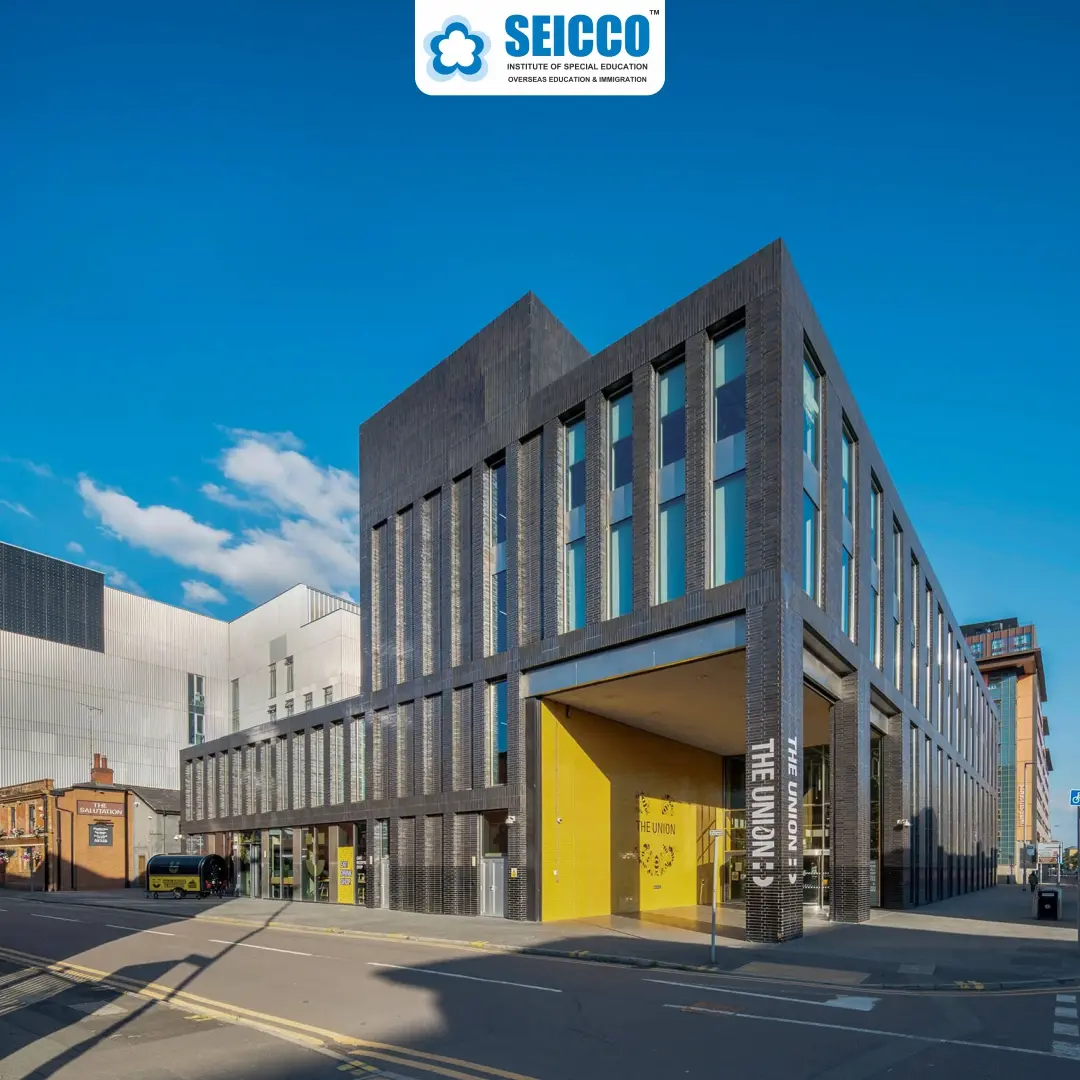
For many Indian students, the idea of studying mass media or journalism abroad introduces two powerful incentives: global exposure and creative freedom. The United Kingdom has long been one of the most attractive destinations for such courses—thanks to its rich media landscape, world-class institutions, English-language environment, and strong practical focus. If you’re an Indian student considering the U.K. for mass media or journalism, this guide will walk you through why it’s worth it, what the courses involve, costs, admission criteria, career paths and how SEICCO can support you every step of the way.
Why Choose the U.K. for Mass Media & Journalism?
There are several compelling reasons:
- Many U.K. institutions have a legacy in journalism education, combining theory with hands-on practice. For example, a standard description of a journalism programme in the U.K. notes how students learn “investigative journalism, media law, digital reporting” and have access to newsrooms and media production facilities.
- English as the primary medium of instruction is a decisive benefit for Indian students: you won’t face a foreign language barrier.
- The U.K. media industry is well developed—broadcast, print, digital, and even newer media formats are thriving. So while the course is academic, the industry exposure is real.
- U.K. programmes increasingly reflect modern media trends: digital storytelling, data journalism, social media, multimedia—not just traditional news reporting.
- For Indian students whose ambitions stretch internationally, a U.K. qualification adds weight: in terms of reputation, mobility, and the possibility of working abroad.
What Do These Courses Look Like?
Let’s break down what to expect at undergraduate and postgraduate levels.
Undergraduate (BA / BSc)
- Typical duration: 3 years full-time in England and Wales.
- Typical focus: foundational modules in media theory, journalism basics (reporting, editing, broadcast), digital media, ethics, audience studies, practical projects.
- Many courses include specialisms such as Broadcast Journalism, Digital Journalism, Investigative Reporting, or Media & Society.
- Indian students should expect to build a portfolio or complete practical tasks (podcasting, video production, blogging, social-media campaigns).
- Eligibility: Generally, Class 12 with strong marks, English proficiency test (IELTS) if required. Some colleges may ask for personal statements or relevant experience.
Postgraduate (MA / MSc)
- Typical duration: 1 year full-time (or 2 years part-time). For example, the University of Glasgow’s MSc in Media, Communications & International Journalism is one such example.
- Focus: advanced modules—digital media strategy, global journalism, data journalism, media management, research methods, major project or dissertation.
- Indian students often choose postgraduate journalism if they already hold a bachelor’s degree (in media, communications, English etc.) and want to upskill in multimedia, digital media or journalism globally.
- Specialisations may include Investigative Journalism, Sports Journalism, Data Journalism, Broadcast Journalism etc.
Key Admissions Criteria & Requirements
As an Indian student aiming to study mass media or journalism in the U.K., you’ll need to keep the following in mind:
- Valid bachelor’s degree (for postgraduate) or completion of Class 12/High School (for undergraduate) from a recognised board/university.
- Good academic record: Many programmes require grades equivalent to UK upper second class or better.
- English-language proficiency: IELTS (6.0–7.0 typical) or equivalent. Some universities may waive if your prior education was in English.
- Portfolio or sample work (video, writing, blog) may be required for journalism or media programmes—especially ones with practical emphasis.
- Statement of Purpose (SOP) or personal statement: Highlight your interest in media/journalism, creative skills, any prior work/internship, and career goals.
- References/Letters of Recommendation (LOR) especially at postgraduate level.
- Financial proof and visa eligibility: As with any international study in the U.K., you must demonstrate ability to pay tuition and living costs, and comply with student visa regulations.
Cost of Study & Living – Rough Breakdown for Indian Students
It’s essential to budget realistically. Here’s an approximate guide:
- Tuition Fees: For undergraduate journalism/media programmes, fees for international students in the U.K. commonly range from £10,000 to £25,000 per year depending on university and location.
- Postgraduate (MA/MSc) programmes: Typical fees are in the range of £12,000 to £22,000 for international students.
- Living Costs: In the U.K., international student living costs (including accommodation, food, transport) vary by city. London will be far higher; smaller cities will be more affordable. Estimate around £12,000–15,000 per annum in many cases.
- Conversion to INR: For Indian students, given current exchange rates, e.g. £1 ~ ₹100-110 (depending on when you read this). So a £15,000 living cost is roughly ₹15-16 lakh.
- Scholarships & Financial Aid: Some universities offer merit scholarships, bursaries or alumni discounts for media/journalism programmes—Indian students should explore early.
What Skills Will You Gain?
By the end of a media or journalism degree in the U.K., students can expect:
- Strong reporting and writing skills (print, online or broadcast).
- Ability to analyse media audiences, platforms, ethics and governance.
- Familiarity with digital tools (video editing, podcasting, social-media management).
- Understanding of media strategy, branding, public relations and content creation.
- Research skills (important for those who may go into media research or further studies).
- Practical project experience—many programmes include internships, newsroom work, placements, or partnerships with media organisations.
These mix of skills are valuable for modern media careers, which no longer resemble only the “newspaper journalist” stereotype but include roles such as content strategist, podcast producer, social-media editor, digital campaign manager, media analyst, and more.
Career Paths & Employability for Indian Students
Studying mass media and journalism in the U.K. opens multiple career routes:
- Traditional journalism: reporter, correspondent, editor for newspapers, TV, radio, online media.
- Digital media & content creation: brand storytelling, influencer management, content strategy, multimedia journalism.
- Public Relations/Corporate Communications: many media graduates move into PR agencies, corporate communications, NGOs.
- Media research & teaching: if you pursue further study (PhD) or media analytics roles.
- Broadcast, podcasting and multimedia careers: With audio-video skills, you can work in TV/radio studios, podcast platforms, social-tech media.
- For Indian students, the benefit of a U.K. qualification is global mobility—you can work in India, other countries, or move into international media roles.
While specific salary data vary by role and location, media industry entry-level positions in the U.K. for graduates can start in £20,000-30,000 (INR ~₹20-30 lakh) and rise depending on experience, specialism and employer.
Why Now Is a Good Time for Indian Students (2026 Focus)
- Digital media consumption continues to rise globally which increases demand for media professionals.
- U.K. institutions are investing in data journalism, social-media ethics, multimedia storytelling—these advanced skills give Indian students a future-proof advantage.
- With shifts towards global content production, multilingual media, and international reporting, Indian students with U.K. degrees are well placed.
- Post-study work options in the U.K. have improved (check latest UK student visa and Graduate Route policies).
- For Indian students, the time zone proximity (compared to say U.S.A.), English language environment, and strong Indian student community make the U.K. a relatively smooth transition.
Challenges to Consider
- Cost: While the U.K. offers great value, the combination of tuition + living expenses means you must plan a budget and possibly secure funding/scholarships.
- Competitive Admissions: Top media/journalism programmes receive strong applications; your personal statement, portfolio and overall profile matter.
- Practice vs Research: Some programmes lean more theoretical; ensure you pick one with strong practical training if your goal is journalism in action.
- Visa and work rights: Indian students should check the latest immigration rules for international students in the U.K. and possibilities of working part-time while studying.
- Cultural adjustment: While English is the primary medium, the media context, newsroom culture, and ethics might differ from Indian contexts; be ready to adapt.
How SEICCO Helps Indian Students Ready for U.K. Media & Journalism Courses
At SEICCO, we specialise in guiding Indian students through study-abroad journeys. For mass media & journalism studies in the U.K., we help you with:
- Shortlisting universities and courses with strong journalism/media programmes.
- Helping you prepare your portfolio, writing samples, or work sample—key for journalism admissions.
- Advising on application documents, including SOP, LORs, transcripts, and ensuring they meet U.K. standards.
- Budget and financial planning: we analyse tuition, living costs, currency conversion, available scholarships.
- Visa and immigration counselling: we stay updated on U.K. student-visa rules, work-permit options, and help you plan your stay.
- Pre-departure orientation: helping you understand the U.K. media industry, internships, placements, student life for Indian students abroad.
Final Takeaway
For Indian students passionate about telling stories, shaping public opinion, working in digital media or broadcast journalism, the U.K. continues to be one of the best destinations. A degree in mass media or journalism from a reputable U.K. university gives you not just a credential—but skills, exposure, a global network and a pathway into a dynamic industry.
With the right planning, strong application, budget and mindset, the path opens wide. At SEICCO, our aim is to make sure you walk that path with clarity. Start your journey now, check your options, build your portfolio, and prepare to study media and journalism in the U.K. with confidence.