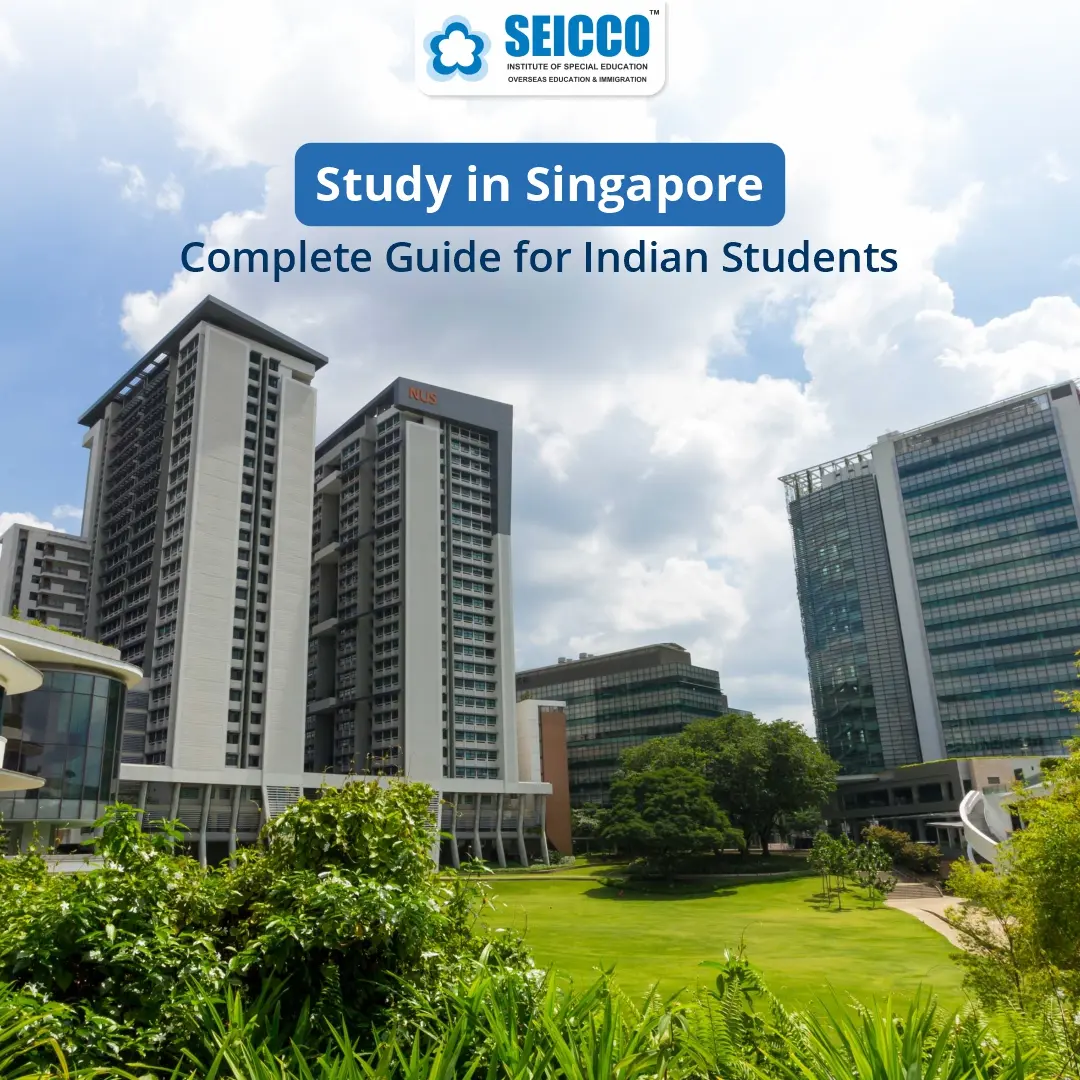
Study in Singapore: Complete Guide for Indian Students
Over the past two decades, Singapore has emerged as one of the most sought-after destinations for Indian students who want to pursue world-class education without going too far from home. Known for its global universities, industry-oriented programs, and a safe, multicultural environment, Singapore offers the perfect blend of academic excellence and practical exposure. This guide explores everything Indian students need to know about studying in Singapore—from the application process and costs to scholarships, lifestyle, and career prospects.
Why Choose Singapore as a Study Destination?
For Indian students, Singapore combines the advantages of proximity, affordability, and academic reputation. Institutions like the National University of Singapore (NUS) and Nanyang Technological University (NTU) consistently rank among the top 20 universities in the world. Singapore’s education system focuses on applied learning, research, and real-world skill-building, which aligns with global industry demands.
Beyond academics, Singapore’s strategic location makes it a global hub for finance, technology, logistics, and hospitality. Indian students also feel culturally at home due to the strong Indian diaspora community, regular Indian festivals, and widespread availability of Indian food.
Top Universities in Singapore
- National University of Singapore (NUS): Ranked consistently in the global top 10, NUS offers programs in science, technology, engineering, business, and social sciences.
- Nanyang Technological University (NTU): Known for engineering, business, and computer science, NTU is research-intensive and globally respected.
- Singapore Management University (SMU): A leader in business, economics, and law, SMU follows an interactive pedagogy similar to Ivy League schools.
- INSEAD (Singapore Campus): One of the world’s top business schools, offering MBAs and executive programs.
- Private Universities and Institutes: SIM Global Education, James Cook University (Singapore Campus), and Curtin Singapore offer specialized programs with international recognition.
Popular Courses for Indian Students
Singapore offers a wide spectrum of programs tailored for global careers. Among Indian students, the most popular disciplines include:
- Business and Management – Singapore’s position as an Asian financial hub makes management and finance degrees highly valued.
- Engineering and Technology – Strong research opportunities in AI, robotics, and biotechnology.
- Computer Science and IT – With tech giants like Google and Meta operating in Singapore, IT graduates are in demand.
- Hospitality and Tourism – As a global travel hub, Singapore provides hands-on training for careers in tourism and hospitality management.
- Design and Media – Creative industries are thriving, offering pathways in animation, design, and film.
Application Process for Indian Students
The application process in Singapore is student-friendly and transparent. Here’s a step-by-step outline:
- Research Programs and Universities – Identify the course that fits your career goals. Most universities have detailed program pages with admission criteria.
- Eligibility Requirements – For undergraduate programs, students must have completed Class 12 (CBSE/ICSE/IB accepted). For postgraduate programs, a recognized bachelor’s degree is required.
- English Proficiency – IELTS or TOEFL scores are required unless the medium of instruction in prior education was English. Many universities accept an IELTS score of 6.0–6.5.
- Application Submission – Applications are typically submitted online along with supporting documents such as academic transcripts, SOP, LORs, and resume (for postgraduate).
- Application Deadlines – Universities generally have two intakes: August and January. Deadlines vary between 6–8 months before intake.
- Visa Process – After securing admission, students must apply for a Student Pass from the Immigration and Checkpoints Authority (ICA).
Cost of Studying in Singapore
While Singapore is not the cheapest destination, it is more affordable than the UK, USA, or Australia.
- Tuition Fees: Undergraduate programs cost between SGD 10,000–20,000 (₹6–12 lakhs) per year, while postgraduate degrees range between SGD 20,000–35,000 (₹12–21 lakhs).
- Living Expenses: Students should budget around SGD 1,000–1,500 (₹60,000–90,000) per month, which covers accommodation, food, travel, and personal expenses.
- Student Pass (Visa): Application fee is SGD 30 (₹1,800) plus an issuance fee of SGD 60 (₹3,600).
Scholarships for Indian Students
To ease financial stress, several scholarships are available:
- Singapore International Graduate Award (SINGA): Fully funds PhD students with tuition and stipend.
- NUS and NTU Merit Scholarships: Offer partial or full fee waivers.
- INSEAD Scholarships: Designed for MBA students, awarded on merit and need basis.
- ASEAN Undergraduate Scholarship: Open to outstanding students from ASEAN countries, including India.
Working While Studying in Singapore
Indian students on a valid Student Pass are allowed to work up to 16 hours per week during term and full-time during vacations without a separate work permit. Part-time jobs in retail, food service, and campus administration are common. Many students also pursue internships aligned with their fields, gaining practical experience and industry connections.
Lifestyle and Student Life in Singapore
Life in Singapore offers a balance of safety, diversity, and vibrancy. The city-state has one of the lowest crime rates globally, making it safe for international students. Efficient public transport ensures easy access to campuses and city attractions.
Indian students also enjoy a rich cultural life—Little India is a hub for Indian food, shopping, and festivals like Diwali and Holi. Recreational activities include visiting Sentosa Island, exploring Gardens by the Bay, and enjoying global cuisines at hawker centers.
Post-Study Opportunities
After graduation, students can apply for a Long-Term Visit Pass to seek employment. Graduates with degrees in technology, finance, and business are in demand, and companies in Singapore often prefer to retain international talent. Singapore’s role as a global economic hub provides opportunities not only in local markets but also across Asia-Pacific.
Quick FAQs
1. Do I need IELTS to study in Singapore?
Yes, most universities require IELTS or TOEFL, unless you studied in an English-medium institution.
2. What is the average cost of studying in Singapore for Indian students?
On average, tuition costs ₹6–21 lakhs per year, with living expenses around ₹60,000–90,000 per month.
3. Can I work part-time while studying?
Yes, Indian students can work up to 16 hours per week during term and full-time during breaks.
4. Are scholarships available for Indian students in Singapore?
Yes, several scholarships like SINGA, NUS Merit Scholarships, and ASEAN scholarships support Indian students.
5. Is Singapore safe for Indian students?
Absolutely. Singapore consistently ranks as one of the safest cities in the world.
Conclusion
Studying in Singapore is an opportunity to experience a world-class education system in a safe, vibrant, and globally connected environment. For Indian students, it offers not only high-quality academics but also cultural familiarity, career opportunities, and a shorter distance from home. With careful planning, research, and preparation, Singapore can be the stepping stone to a rewarding global career.